

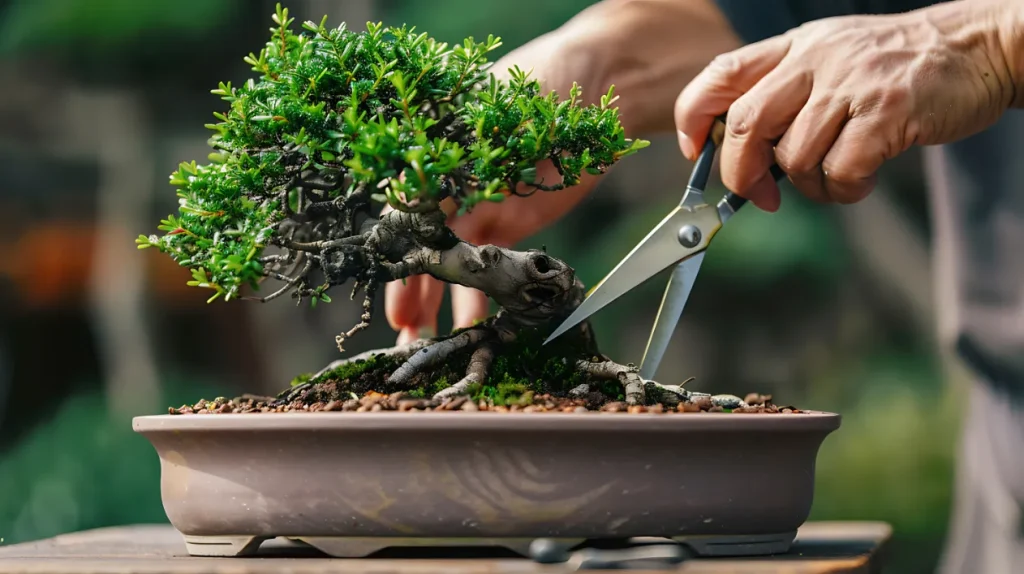
Why Bonsai Experts Use Expensive Clippers: The Real Difference Quality Makes
If you have ever browsed a specialist bonsai supplier and wondered why a pair of scissors costs eighty pounds or a set of branch cutters several hundred, you are not alone. To someone new to bonsai, it can look like premium pricing for its own sake. But ask any experienced grower why they use high-end Japanese tools and the answer is always the same: once you have used them, you understand immediately.
The Cut Is Everything
In bonsai, how a cut is made directly affects the health of the tree. A clean, precise cut severs tissue in a single action, leaving a smooth wound that begins healing quickly. A blunt or poorly made tool crushes and tears the cellular tissue around the cut rather than severing it cleanly. That crushing damage extends further into the branch than the visible wound and creates a much larger area of stressed tissue that is slower to heal and more vulnerable to disease and dieback.
Over time, and across dozens of cuts per session, the cumulative effect on a tree’s health is significant. This is why experienced growers are not being precious about their tools. They are making a practical choice that directly affects the quality of their work and the wellbeing of their trees.
What Makes a High-Quality Bonsai Tool Different
Premium Japanese bonsai tools, from makers such as Masakuni, Yoshiaki, and Tokoname, are forged from high-carbon steel using traditional metalworking methods. The steel is harder, holds an edge for far longer, and can be sharpened to a finer degree than the softer steel used in budget tools.
The geometry of the cutting edge is also more precise. Blades are ground to exact angles that produce the cleanest possible cut for each tool’s specific purpose. Concave cutters are shaped to remove a branch and create a hollow wound that heals naturally. Scissors are balanced and tensioned so they close evenly along the full length of the blade. These details matter when you are working with living wood.
Longevity and the Real Cost
A well-made pair of Japanese bonsai scissors, properly maintained, will last decades. A cheap pair may last a season before the blades lose their edge or the joint loosens. When you calculate the cost over ten or fifteen years of use, the economics of buying quality become much more straightforward.
High-end tools also sharpen more easily and more precisely than cheap ones. Many serious growers maintain their tools on Japanese waterstones, restoring a surgical edge that keeps each tool performing at its best year after year.
Where to Start
You do not need to buy a full professional set immediately. Prioritise one or two key tools, a good pair of scissors and concave cutters, and buy the best quality you can reasonably afford. Mid-range tools from reputable suppliers such as Kaizen Bonsai or Willowbog offer excellent performance without the premium price of top-tier professional sets.
Finally
The best bonsai tools are not status symbols. They are precision instruments chosen by people who understand that in this craft, the quality of the cut is inseparable from the health and beauty of the tree.