

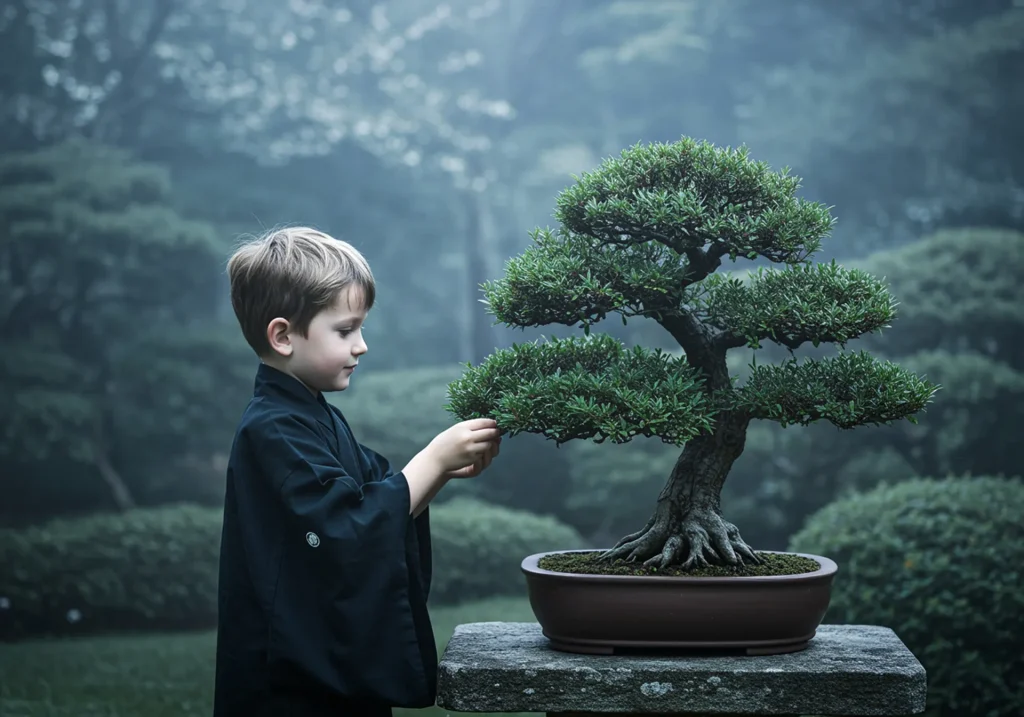
The Psychology of Caring for Bonsai: Why It Does So Much More Than You Expect
People come to bonsai for all sorts of reasons. Some are drawn by the beauty of the trees themselves. Others are looking for a creative outlet, a connection to Japanese culture, or simply something to do with their hands. What most of them discover, often without expecting it, is that bonsai does something for the mind that is genuinely difficult to find elsewhere.
The Practice of Presence
Caring for bonsai demands a quality of attention that most of modern life actively discourages. When you sit with a tree, whether you are wiring a branch, trimming new growth, or simply checking the soil moisture, the work requires you to be fully present. There is no space in that moment for the background noise of unread messages, unfinished tasks, or tomorrow’s concerns.
Psychologists describe this state as flow, a condition of complete absorption in a meaningful activity where time seems to pass differently and the mind quietens. Bonsai is unusually good at producing this state because the work is demanding enough to require focus but not so cognitively heavy that it becomes stressful.
Patience as a Practice
Bonsai teaches patience in a way that is almost impossible to shortcut. A tree does not grow faster because you want it to. A branch does not set in a new position because you are impatient with it. The tree operates on its own timeline, and working with bonsai means accepting and ultimately appreciating that. Many growers find that this enforced patience gradually extends into other areas of their lives, making them more measured and less reactive.
Responsibility and Reward
There is a particular kind of satisfaction in caring for a living thing consistently and well over a long period of time. Unlike most hobbies, where the product of your effort is a finished object, bonsai is never finished. The tree is always developing, always responding to your care, and always presenting new decisions. This ongoing relationship creates a sense of responsibility and investment that is genuinely sustaining.
When a tree you have cared for through difficult periods produces a spectacular flush of spring growth, or when a branch that you wired months ago holds exactly the position you intended, the satisfaction is real and earned in a way that few things in modern life provide.
Connection to Something Larger
Many bonsai growers speak about the sense of connection their trees provide, to nature, to time, and to something beyond the immediate concerns of daily life. Working with trees that may outlive you by centuries has a quietly humbling effect. It puts things in perspective in a way that is difficult to manufacture and impossible to rush.
In Summary
Bonsai is often described as a hobby, but for many people it becomes something closer to a practice in the fullest sense of that word. It cultivates attention, patience, and presence as naturally and quietly as it cultivates trees. If you have ever wondered why bonsai growers are so devoted to their trees, the psychology of the practice is a large part of the answer.