
Bonsai Styles Explained: Finding the Right Form for Your Tree
One of the things that distinguishes bonsai from simply growing a tree in a pot is the intentional shaping of the tree according to recognised aesthetic principles. These principles are expressed through a set of traditional styles, each representing a different way that trees grow in nature. Understanding the main styles helps you see your tree with a more informed eye and make design decisions that work with its natural character rather than against it.
Formal Upright (Chokkan)
The formal upright style features a straight, tapering trunk that grows vertically from base to apex. Branches are arranged in a regular, balanced pattern, heavier and longer toward the base and progressively smaller and shorter toward the top. It is one of the most classical styles and works best with species that naturally grow in this form, such as pine and spruce.
Informal Upright (Moyogi)
The most common style in bonsai, the informal upright has a trunk that curves and moves as it rises but always finishes with the apex above the base of the trunk. It reflects the natural growth of most trees in open conditions, where light, wind, and competition create gentle movement in the trunk. It suits almost every species and is an excellent starting point for beginners.
Slanting (Shakan)
In the slanting style, the trunk grows at a clear angle from the base, giving the impression of a tree shaped by prevailing wind or growing on a slope. The roots on the side toward which the trunk leans are often emphasised to suggest the anchor the tree needs to maintain its position. It is a dynamic and visually interesting style.
Cascade (Kengai) and Semi-Cascade (Han-Kengai)
Cascade styles mimic trees growing on cliff faces or steep slopes, where the weight of snow or the pull of gravity has drawn the main trunk or primary branch below the level of the pot. Full cascade drops below the base of the pot. Semi-cascade reaches to or just below the rim. Both require tall pots to accommodate the downward growth and are dramatic in appearance.
Windswept (Fukinagashi)
The windswept style represents a tree that has been shaped by persistent strong wind from one direction. Branches and foliage extend predominantly to one side, often with the trunk leaning in the same direction as the branches. It conveys a sense of strength and resilience in the face of constant environmental pressure.
Literati (Bunjin)
The literati style is the most abstract and minimalist in bonsai. It features a long, slender, often dramatically twisted trunk with sparse foliage concentrated near the apex. It is inspired by the ink paintings of Chinese literati scholars and conveys a sense of age, solitude, and endurance. It is a challenging style that rewards a confident, restrained approach.
Forest (Yose-ue)
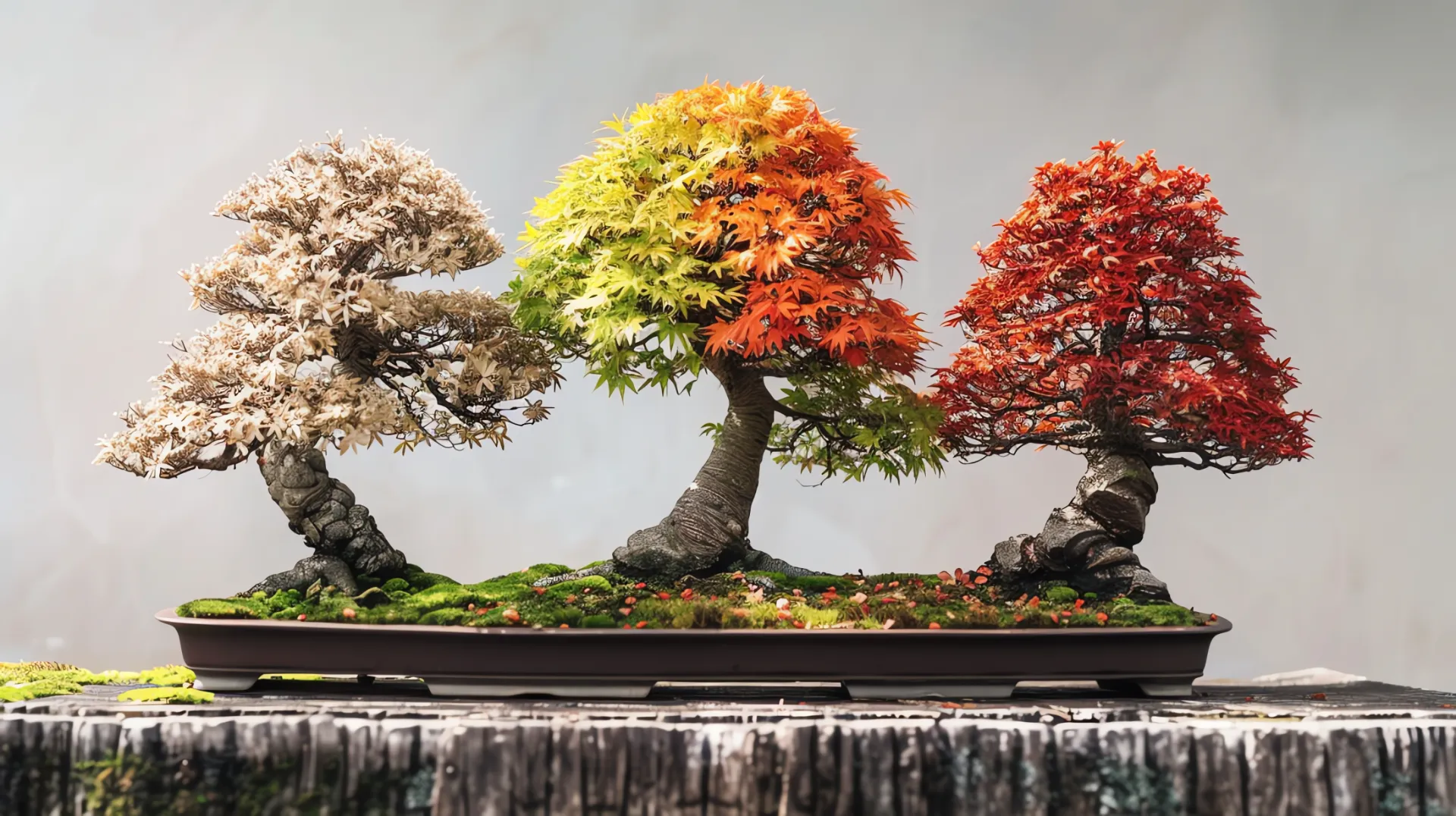
Forest plantings use multiple trees of the same species arranged in a single container to create the impression of a woodland scene. Trees of varying heights and trunk thicknesses are arranged in asymmetrical groupings, with taller trees toward the front and progressively smaller ones creating depth. The result is one of the most visually striking presentations in bonsai.
In Summary
Bonsai styles are not rigid rules but frameworks for thinking about design. The best bonsai are those where the style feels natural to the tree rather than imposed upon it. Study the natural movement and character of your tree before deciding on a direction, and let its existing qualities guide the style rather than forcing it into a predetermined form.

