
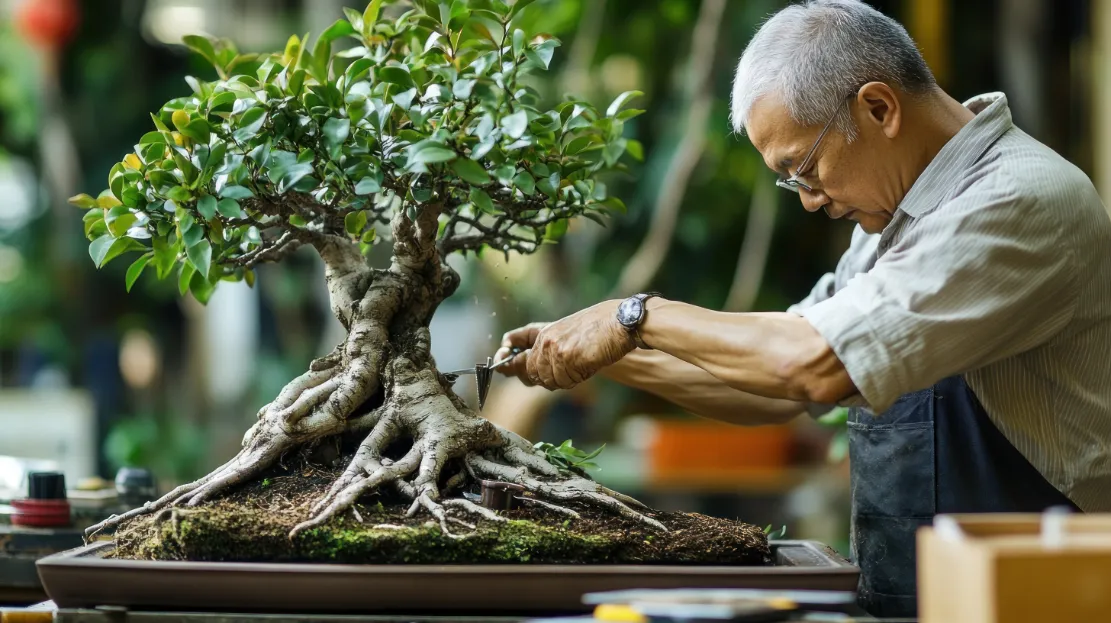
Bonsai as a Mindfulness Practice: What the Trees Can Teach You
Mindfulness has become a word used so broadly that it has lost some of its meaning. But the genuine article, the practice of bringing full, non-judgmental attention to the present moment, is something that bonsai cultivates as naturally and reliably as it cultivates trees. Many growers come to bonsai for the trees and discover, often without looking for it, that the practice is changing the way they relate to time, attention, and their own state of mind.
The Slowing Down Effect
Bonsai operates on a timescale that modern life rarely does. A tree develops over years and decades. Changes happen slowly. Results are not immediate and cannot be forced. Engaging seriously with bonsai means accepting this pace and finding genuine value in it, which is itself a significant shift for most people.
Growers often report that time spent with their trees feels qualitatively different from the rest of their day. The mind settles. The constant background urgency fades. Problems that felt pressing before sitting down with a tree seem less acute afterward. This is not coincidence. It is what sustained, absorbed attention to something living and slow-moving reliably produces.
Observation Without Judgement
Good bonsai care requires you to observe without immediately evaluating. You look at a tree, take in its current condition, and assess what is needed before acting. This is the opposite of the reactive mode that most people spend much of their time in. Over time, bonsai growers often find that this quality of careful observation without immediate judgement begins to extend into other areas of their lives.
Working With Impermanence
Bonsai is not without loss. Trees die, sometimes despite your best efforts. Branches are lost to weather or disease. Designs that took years to develop are set back by a single hard winter. Learning to accept these losses without being derailed by them is part of what bonsai teaches. It is a practical, lived encounter with impermanence that most people find quietly valuable rather than painful.
The Ritual of Daily Care
There is something grounding about a care routine built around living things. Checking on your trees each morning, touching the soil, noting the new growth or the condition of the leaves, creates a daily anchor point that many growers describe as one of the most stabilising parts of their day. It is small, sensory, and real in a way that most of what fills our days is not.
No Special Equipment Required
Unlike formal meditation practices, bonsai requires no cushions, no instruction in technique, and no particular state of mind to begin with. You simply sit down with your tree, bring your attention to what is in front of you, and do what the tree needs. The meditative quality arrives on its own.
In Closing
If you are looking for a reason to begin bonsai, the mental and emotional benefits are as compelling as the aesthetic ones. And if you are already growing trees, it may be worth pausing to notice what the practice is already doing for you beyond the trees themselves. The benefits are real, and they compound quietly over time, much like the trees.

